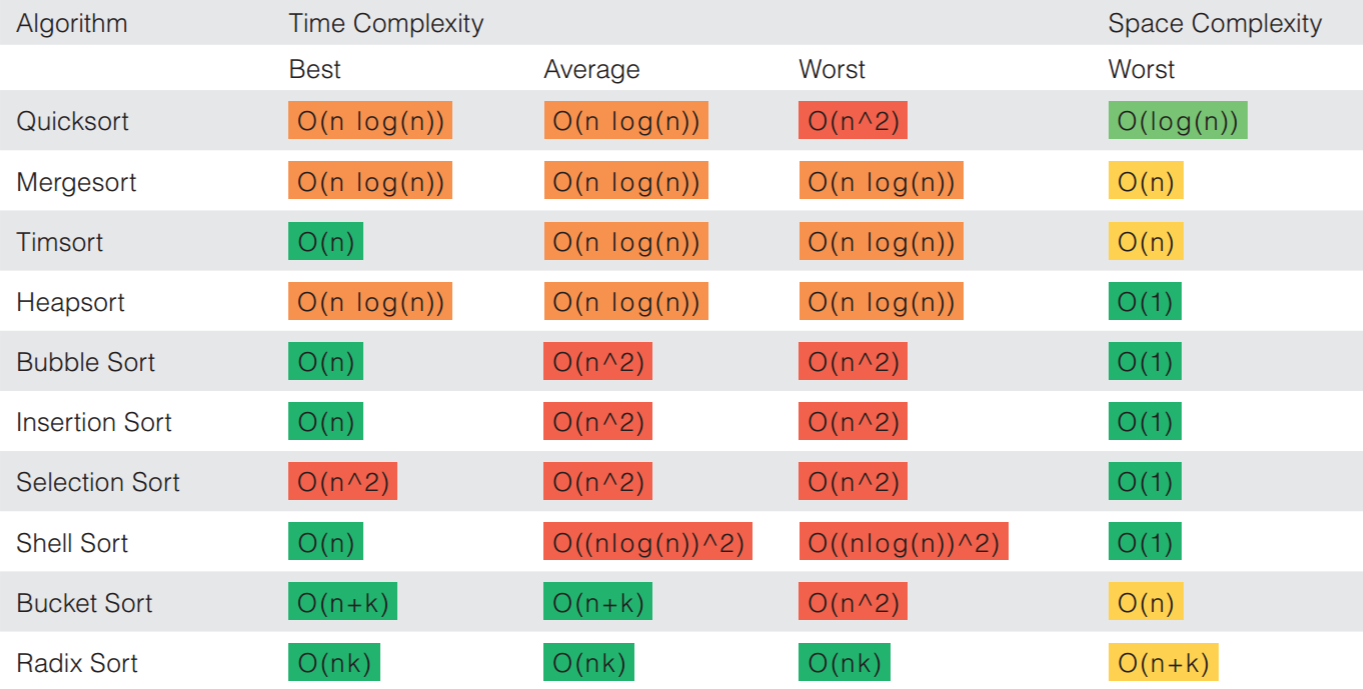
| x ^ 0s = x | x & 0s = 0 | x | 0s = x |
|---|---|---|
| x ^ 1s = ~x | x & 1s = x | x | 1s = 1s |
| x ^ x = 0 | x & x = x | x | x = x |
-
Two types of right shift:
-
arithmetic right shift: shift values to the right but fill in the new bits with the value of the sign bit.
a = 10110101 a >> 1 a = 11011010 -
logical right shift: shift the bits and put a 0 in the most significant bit.
a = 10110101
a >>> 1
a = 01011010
-
-
Get Bit
boolean getiBit(int num, inti) {
	return ((num && (1 << i)) != 0);
}
-
Set Bit
int setBit(int num, int i) {
	return num | (1 << i);
}
-
Clear Bit
// clear ith bit only
int clearBit(int num, int i) {
    int mask = ~(1 << i);
    return num & mask;
}
// clear all bits from the most significant bit through i
int clearBitMSBthroughI(int num, int i) {
    int mask = (1 << i) - 1;
    return num & mask;
}
// clear all bits from i through 0
int clearBitsIthrough0(int num, int i) {
    int mask = (-1 << (i + 1));
    return num & mask;
}
-
Update Bit
int updateBit(int num, int i, boolean bitIs1) {
    int value = bitIs1 ? 1 : 0;
    int mask = ~(1 << i);
    return (num & mask) | (value << i);
}
- Probabilistic data structure.
- Tells whether an element may be in a set, or definitely not.
- **False positives: ** a search for a nonexistent element can give an incorrect answer.
- more elements in the filter, the error rate increases.
Bit array + hash map
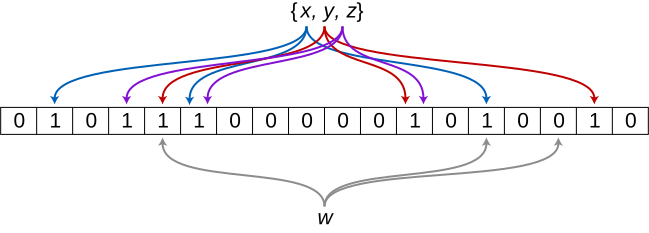
An empty Bloom filter is a bit array of m bits, all set to 0. There are also k different hash functions, each of which maps a set element to one of the m bit position.
- To add an element, feed it to the hash functions to get k bit positions, and set the bits at these positions to 1.
- To test if an element is in the set, feed it to the hash functions to get k bit positions.
- If any of the bits at these positions is 0, the element definitely isn’t the set.
- If all are 1, then the element may be in the set.
- Organize items in order of use.
- Can quickly identify which item hasn't been used for the longest amount of time.
- Often implemented by pairing a doubly linked list with a hash map.
Unlimited Capacity
class LRUCacheDemo {
    public static void lruCacheTest() {
        // if we pass false to the constructor, it will not behave like a LRU cache
        Map<String, String> lruCache = new LinkedHashMap<>(16, 0.75f, true);
        lruCache.put("a", "A");
        lruCache.put("b", "B");
        lruCache.put("c", "C");
        System.out.println(lruCache); // {a=A, b=B, c=C}

        lruCache.get("a");
        System.out.println(lruCache); // {b=B, c=C, a=A}

        lruCache.get("b");
        System.out.println(lruCache); // {c=C, a=A, b=B}
    }
}
Limited Capacity
class LRUCacheDemo {
    public static void lruCacheTest() {
        Map<String, String> lruCache = new LRUCache<>(16, 0.75f, true);
        lruCache.put("a", "A");
        lruCache.put("b", "B");
        lruCache.put("c", "C");
        System.out.println(lruCache); // {a=A, b=B, c=C}

        lruCache.get("a");
        System.out.println(lruCache); // {b=B, c=C, a=A}

        lruCache.put("d", "D"); // eldest entry b=B will be deleted
        System.out.println(lruCache); // {c=C, a=A, d=D}
    }
}
class LRUCache<K,V> extends LinkedHashMap<K,V> {
    private static final int MAX_ENTRIES = 3;
    public LRUCache(int initialCapacity, float loadFactor, boolean accessOrder) {
        super(initialCapacity, loadFactor, accessOrder);
    }
    // Invoke by put and putAll after inserting a new entry into the map
    public boolean removeEldestEntry(Map.Entry eldest) {
        return size() > MAX_ENTRIES;
    }
}class BubbleSort {
// Sort the input array
public static void bubbleSort(int[] arr){
int len = arr.length;
for (int i = 0; i < len - 1; i++) {
for (int j = i + 1; j < len; j++) {
if (arr[j] < arr[i]) {
int temp = arr[i];
arr[i] = arr[j];
arr[j] = temp;
}
}
}
}
}class SelectionSort {
public static void selectSort(int[] arr) {
int len = arr.length;
for (int i = 0; i < len - 2; i++) {
int currentMin = arr[i];
int index = i;
for (int j = i; j < len; j++) {
if (arr[j] < currentMin) {
currentMin = arr[j];
index = j;
}
}
arr[index] = arr[i];
arr[i] = currentMin;
}
}
}class InsertionSort {
public static void insertSort(int[] arr) {
int len = arr.length;
for (int i = 1; i < len; i++) {
int key = arr[i];
int j = i - 1;
// insert element into proper position
while (j >=0 && arr[j] > key) {
// shift
arr[j+1] = arr[j];
j--;
}
arr[j+1] = key;
}
}
}class MergeSort {
public static void merge(int[] arr, int low, int mid, int high) {
int n = high-low + 1;
int[] merged = new int[n];
int left = low;
int right = mid + 1;
int count = 0;
while (left <= mid && right <= high) {
if (arr[left] < arr[right]) {
merged[count++] = arr[left++];
}else {
merged[count++] = arr[right++];
}
}
while (left <= mid) {
merged[count++] = arr[left++];
}
while (right <= high) {
merged[count++] = arr[right++];
}
for (int i = 0; i < n; i++) {
arr[low+i] = merged[i];
}
}
public static void mergeSort(int[] arr, int low, int high) {
int mid = low + (high - low) / 2; // avoid overflow
if (low < high) { // if this is not checked, stack overflow
mergeSort(arr, low, mid);
mergeSort(arr, mid+1, high);
merge(arr, low, mid, high);
}
}
}class QuickSort {
// here we use the end as pivot
public static int partition(int[] arr, int low, int high) {
int left = low;
int right = high - 1;
int pivot = high;
while (true) {
while (arr[left] < arr[pivot])
left++;
while (right > 0 && arr[right] > arr[pivot])
right--;
if (left >= right) {
break;
} else {
// swap left and right
int temp = arr[left];
arr[left] = arr[right];
arr[right] = temp;
}
}
// swap left and pivot
int temp = arr[left];
arr[left] = arr[pivot];
arr[pivot] = temp;
// return new pivot
return left;
}
public static void quickSort(int[] arr, int low, int high) {
// partition the original array into two halves around p
if (low <= high) {
int pivot = partition(arr, low, high);
quickSort(arr, low, pivot - 1); // recursively sort the first partition
quickSort(arr,pivot+1, high); // recursively sort the second partition
}
}
}